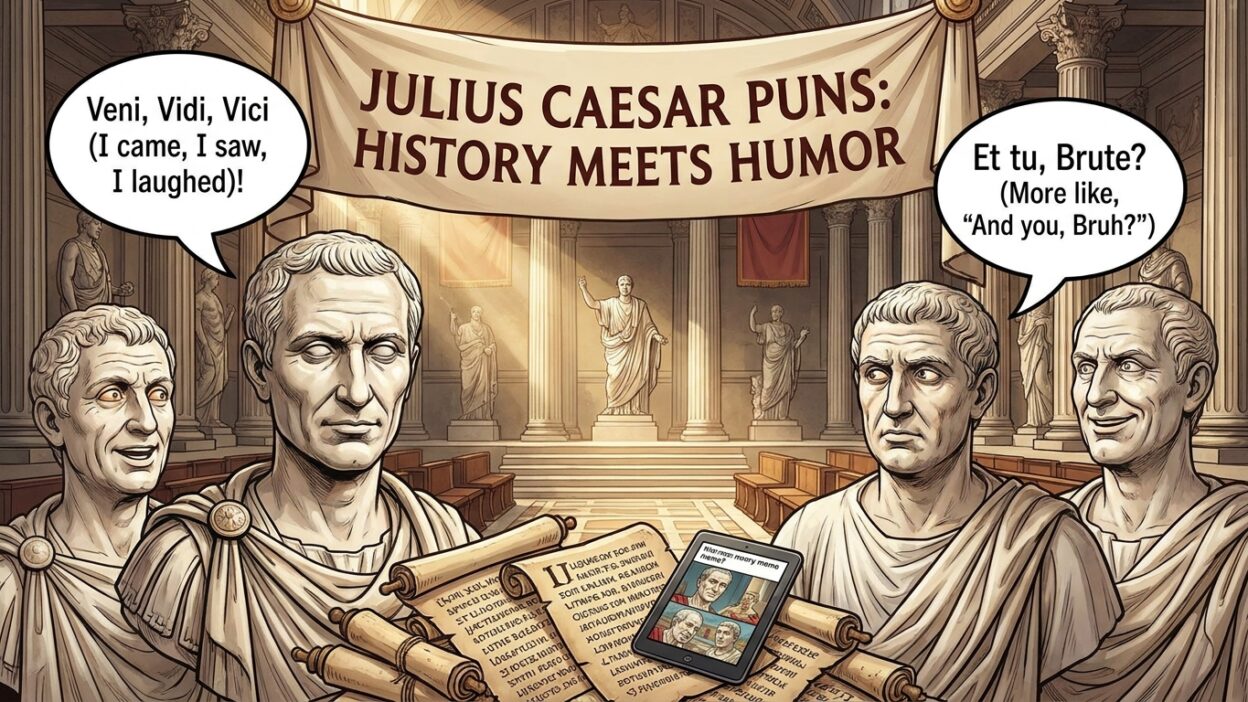
Julius Caesar puns bring a humorous twist to one of history’s most famous Roman leaders, turning ancient events into clever wordplay that is both entertaining and educational. From political drama in the Roman Senate to iconic moments like “Et tu, Brute?”, these puns make history feel more fun, relatable, and easy to remember. They are perfect for students, teachers, and history lovers who enjoy mixing learning with laughter.
Ancient Roman history is often seen as serious, but humor helps make it more engaging and memorable. Julius Caesar puns take well-known historical references and transform them into witty jokes that can be shared in classrooms, memes, or social media captions. This creative style of humor helps simplify complex historical ideas in a fun and enjoyable way.
In this collection of 133+ Julius Caesar puns, you will find smart, funny, and creative wordplays inspired by Roman history. Whether you want educational humor or light entertainment, these puns will keep readers engaged while bringing ancient Rome to life in a playful way.
How Shakespeare Uses Wordplay in Julius Caesar
In Julius Caesar, Shakespeare does not rely on direct jokes. Instead, he uses literary devices like irony, double meaning, and subtle wordplay to create depth in dialogue.
From a Shakespearean perspective, wordplay serves important functions:
- It makes political conversations more engaging
- It hides criticism inside polite speech
- It builds tension before major events
- It reflects power struggles through language
For example, characters often speak respectfully while secretly expressing conflict or distrust. This technique allows audiences to see two meanings at once—what is said and what is meant.
💡 Literary insight: This is called dramatic irony, where the audience understands more than the characters themselves.
Types of Humor and Wordplay in Julius Caesar
The humor in Julius Caesar is subtle, but it exists in multiple forms. Instead of comedy scenes, Shakespeare builds humor into language structure.
Short explanation
Wordplay in the play appears through irony, symbolic speech, and double meanings rather than obvious jokes.
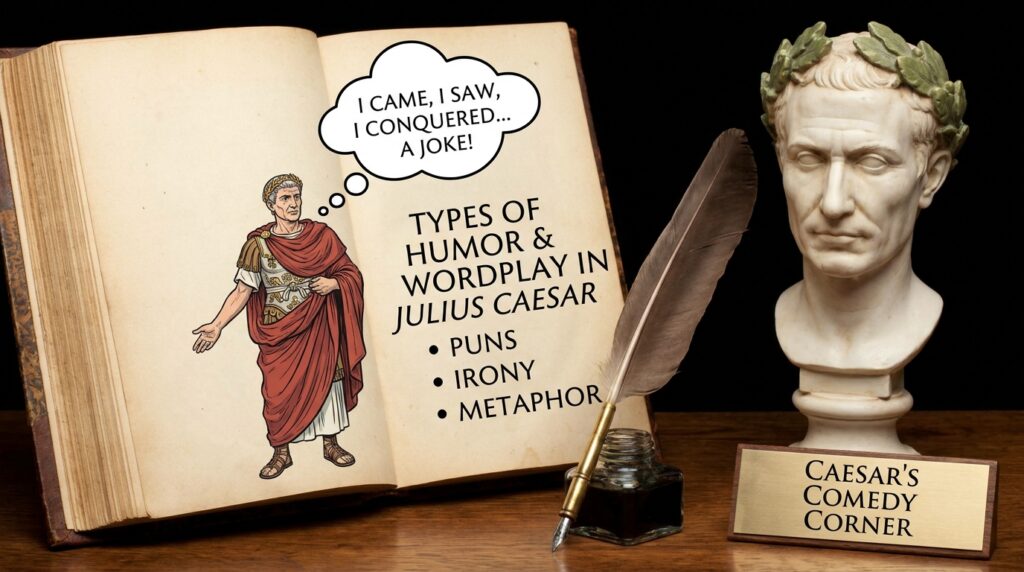
Main forms include:
- Irony: Saying one thing but meaning another
- Double entendre: Words with two meanings
- Political sarcasm: Hidden insults in formal speech
- Contrast humor: Serious tone with underlying tension
Examples in context:
- Senators using respectful language while planning betrayal
- Public speeches that sound loyal but hint at conflict
- Emotional lines that carry hidden tension
📈 Trend insight: Modern audiences reinterpret these moments as “puns” because they resemble today’s sarcastic humor style.
Julius Caesar Act 1 Scene 1: Hidden Wordplay Explained
The opening of the Julius Caesar play is often overlooked, but it contains early signs of Shakespeare’s humor style.
Short explanation
Act 1 Scene 1 introduces everyday workers interacting with authority figures, creating natural language contrast.
What makes it important:
- Simple characters use clever replies
- Officials respond with authority and control
- Language reflects social class differences
Literary meaning:
Shakespeare uses this scene to show how language reflects power. Even simple conversations carry meaning beneath the surface.
💡 Student insight: This scene is often taught first because it shows how Shakespeare blends humor and structure before tragedy begins.
Why Julius Caesar Puns Became Popular in Modern Culture
Modern audiences turned Shakespeare’s wordplay into what we now call Julius Caesar puns—short jokes inspired by Roman history and literature.
Short explanation
These puns transform serious historical and literary ideas into relatable humor.
Why they are popular:
- Easy to understand and share
- Combine education with entertainment
- Work well in memes and captions
- Help students remember literature
Examples of transformation:
- Latin phrases turned into jokes
- Betrayal scenes turned into memes
- Historical names used in modern humor
📊 Social media trend: History-based humor performs well because it mixes knowledge with relatability.
Famous Julius Caesar Line and Modern Interpretations
One of the most recognized lines in literature is:
Short explanation
This line represents betrayal at the highest emotional level in Shakespeare’s play.
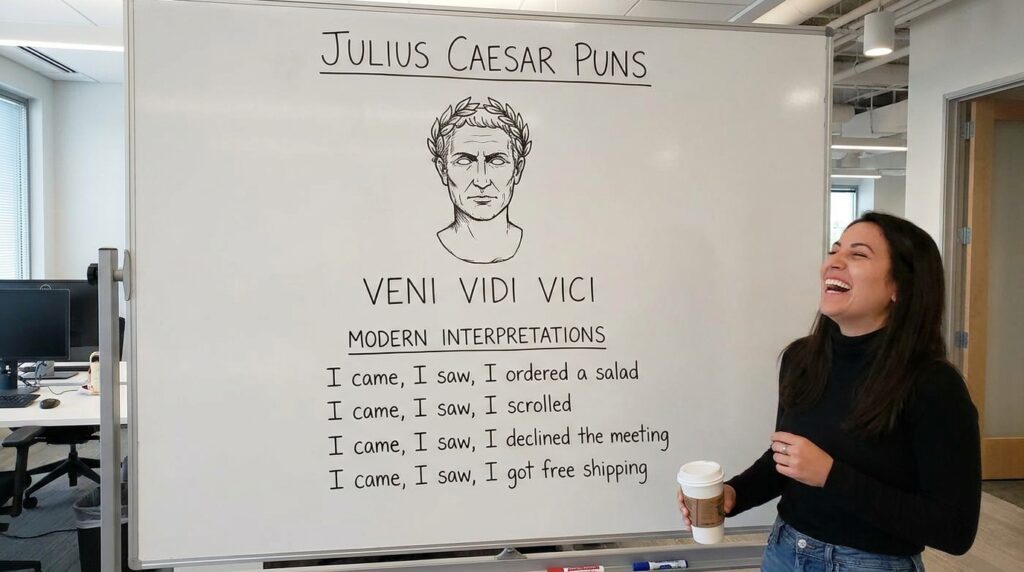
Modern humorous versions:
- “Et tu, WiFi?”
- “Et tu, deadline?”
- “Et tu, group project?”
Other famous phrase:
- “Veni, vidi, vici” → I came, I saw, I conquered
💡 Modern usage: These Latin phrases are frequently remixed into memes because they sound powerful, dramatic, and timeless.
Did Julius Caesar Have a Catchphrase or Famous Quote?
A common search question is whether Caesar had a catchphrase.
Short explanation
He did not have a modern-style catchphrase, but he is strongly associated with one famous Latin expression.
Most famous phrase:
- “Veni, vidi, vici”
Meaning:
- I came, I saw, I conquered
Modern adaptations:
- I came, I saw, I scrolled
- I came, I saw, I slept
📈 Cultural insight: Latin phrases remain popular online because they feel aesthetic, powerful, and historical.
Why Julius Caesar Inspires Memes and Internet Humor
Shakespeare’s writing and Roman history have become part of digital culture.
Short explanation
Caesar-themed humor is now widely used in memes, captions, and online storytelling.
Why it works online:
- Short phrases are easy to remix
- Betrayal themes are relatable
- Dramatic language fits meme tone
- Historical references add humor depth
Common meme themes:
- “Brutus betrayal” jokes
- Roman empire mood captions
- Latin phrase remix humor
💡 Example trend: “Roman empire” is used online to describe overthinking or emotional obsession.
Best Julius Caesar Puns, Jokes & Captions
🔹 Roman Wordplay Humor
- Veni, vidi, snacki
- Et tu, pizza?
- Julius Seize-her
- Caesar the moment
- Rome sweet Rome
- Roman around town
- Brutus? That’s brutal
- Ancient meme energy
- Et tu, WiFi?
- Vici vibes only
🔹 Shakespeare-Inspired Humor
- Act 1: confusion begins
- Act 2: tension builds
- Act 3: betrayal happens
- Act 4: emotional damage
- Act 5: history exam
🔹 Student-Friendly Jokes
- Et tu, homework?
- My grades betrayed me like Brutus
- Caesar salad of emotions
- History class = Roman trauma
- I came, I saw, I failed
🔹 Social Media Captions
- Living my Roman empire era
- Too many Id-es, not enough sleep
- Ancient chaos, modern mood
- Betrayed but aesthetic
- Roman drama unlocked
🔹 Meme-Style Humor
- Julius “just chill us” Caesar
- Et tu, charger cable?
- Veni, vidi, Netflixi
- Brutus trust issues unlocked
- Caesar snack attack mode
- Roman chaos energy
- Vici but tired
- Senate stress level max
- Gladiator mindset activated
- Rome wasn’t built in a day, but my joke was
- Julius dramatic energy
- Caesar confusion mode
- Roman empire TikTok edition
- Et tu, exams?
- Veni, vidi, procrastinated
- Brutus betrayal starter pack
- Ancient Rome but funny
- Caesar vibes loading
- Roman history meme edition
- Et tu, group chat?
FAQs
What are Julius Caesar puns used for?
They are used for humor, memes, education, and making Shakespeare easier to understand in a fun way.
What is an example of a pun in Julius Caesar Act 1 Scene 1?
The play uses subtle wordplay in early scenes where workers and officials communicate with double meanings and class-based humor.
What famous line did Julius Caesar say?
The most famous line is “Et tu, Brute?”, representing betrayal in Shakespeare’s play.
Did Caesar really say “Et tu, Brute?”
No, this line was written by Shakespeare and is not historically confirmed.
What was Julius Caesar’s catchphrase?
His most famous phrase was “Veni, vidi, vici,” meaning “I came, I saw, I conquered.”
Conclusion
The world of Julius Caesar puns shows how ancient history and Shakespearean writing can still feel modern, funny, and relatable today. Through wordplay, irony, and hidden meaning, Shakespeare created a style of humor that continues to inspire memes, captions, and creative writing.
From classroom learning to social media trends, Caesar-inspired humor connects education with entertainment in a powerful way. It helps students understand literature more easily while giving modern audiences endless creative possibilities.
At the end, one thing is clear—great storytelling never becomes old, and Julius Caesar puns prove that even Roman history can still make the internet laugh.

I am Stephen King, and I craft stories that pull you into worlds beyond imagination.
At Punvibe.com I turn ideas into thrilling adventures you’ll never forget